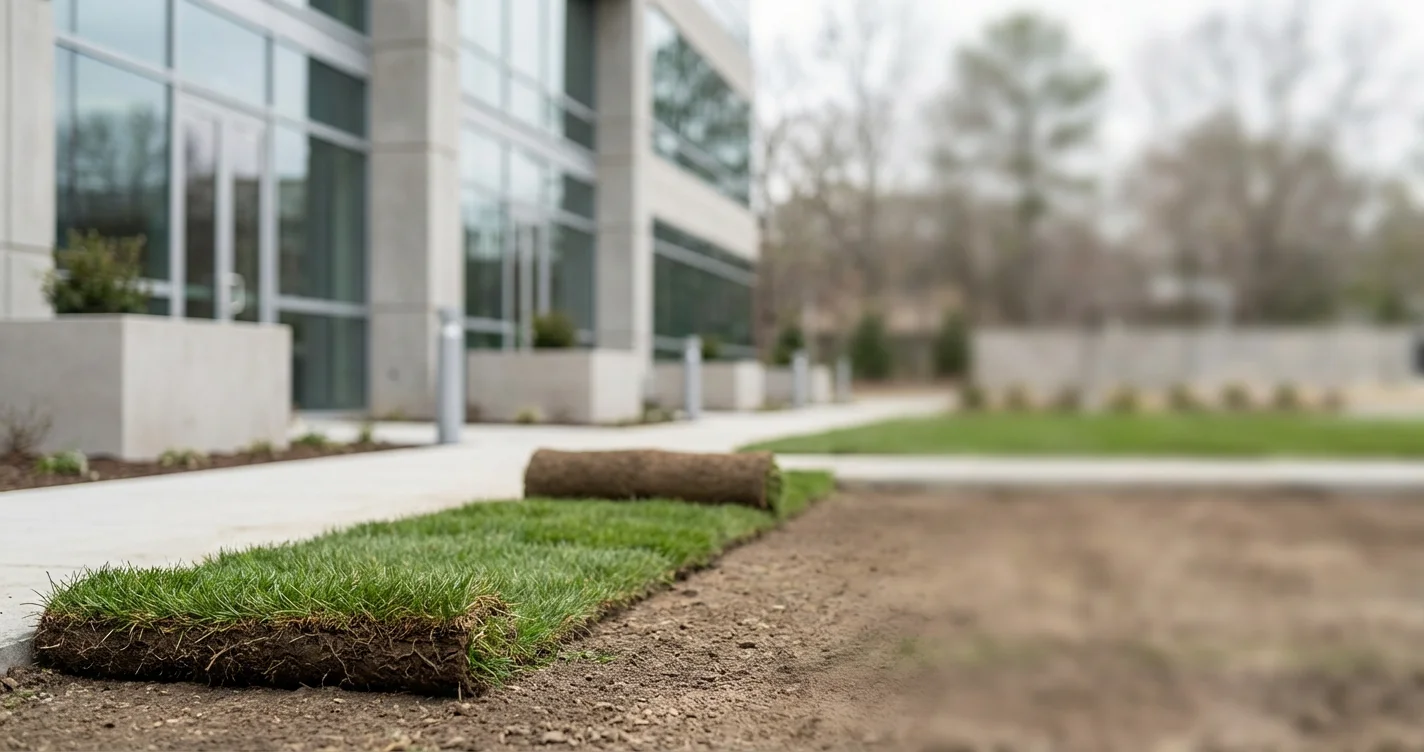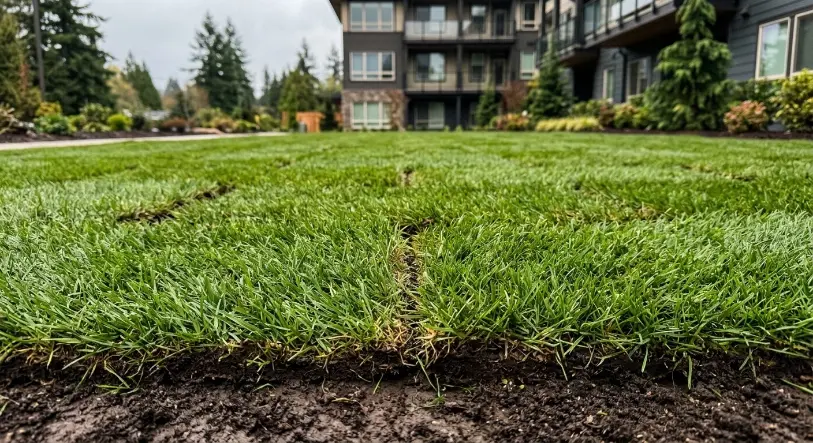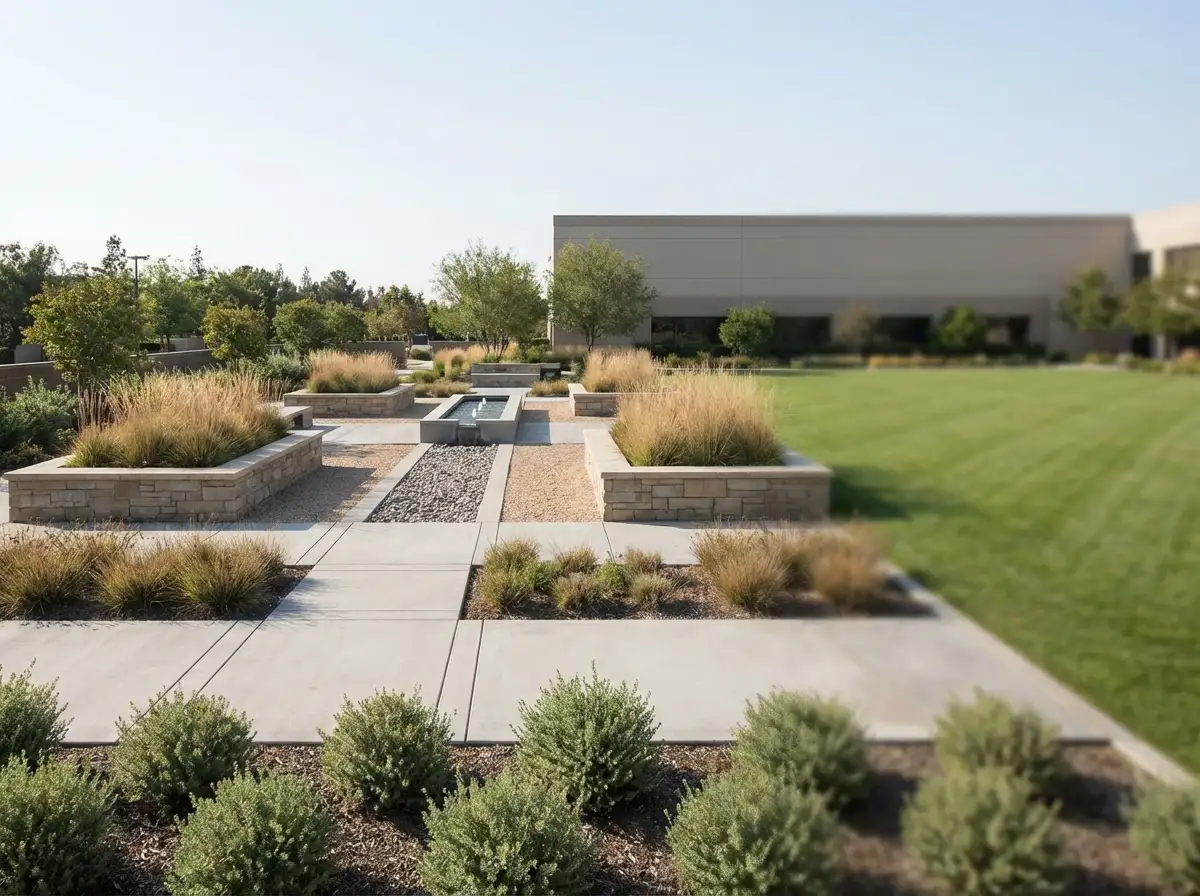
Commercial sod installation is one of the fastest ways to transform a tired commercial property into a professional, welcoming space. At Terra Firma Lawn & Garden, we have been serving strata councils, property managers, and business owners across the Tri-Cities since 1992. Over those 34 years, we have heard just about every question there is about laying sod on commercial sites. Below, we answer the questions that come up most often from Port Coquitlam property managers and business owners who are weighing their options for commercial landscape installation.
How Much Does Commercial Sod Installation Cost in Port Coquitlam?
The cost for landscaper services on a commercial sod project depends on several factors: total square footage, the condition of the existing ground, how much grading and soil amendment is needed, and the variety of sod you choose. For most commercial properties in Port Coquitlam, you can expect to pay between $2.50 and $5.00 per square foot installed, including soil prep, delivery, and labour.
Smaller projects under 2,000 square feet tend to land on the higher end of that range because mobilization and equipment costs are spread over less area. Larger sites along Lougheed Highway or in the industrial zones near Mary Hill Bypass often qualify for volume pricing. We provide detailed, line-item estimates so there are no surprises. Our promise is to do landscaping work right the first time, on time and on budget. If you want a ballpark figure before booking a site visit, the British Columbia Landscape and Nursery Association (BCLNA) publishes regional benchmarks that can help you plan.
What Type of Sod Works Best for Port Coquitlam’s Climate?
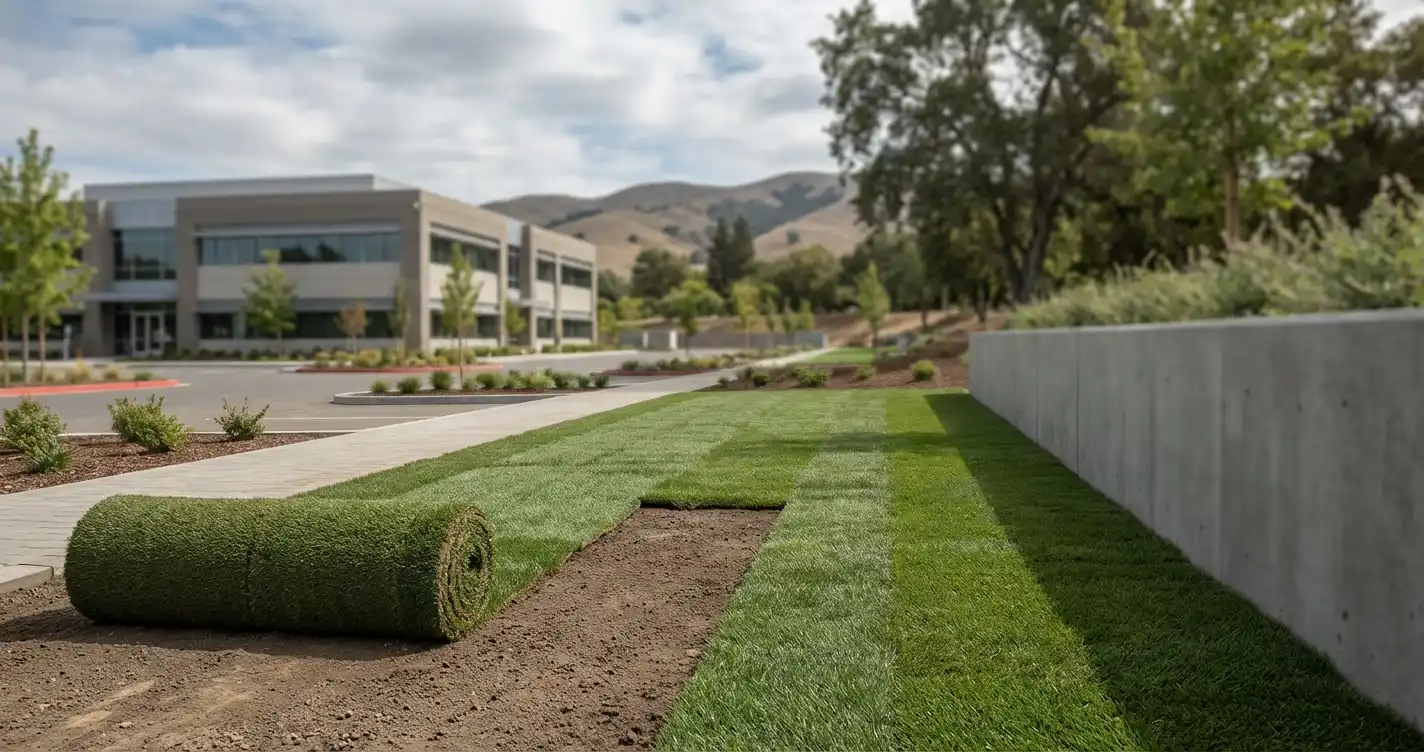
Port Coquitlam sits in a Pacific Northwest climate zone with mild, wet winters and warm, dry summers. That combination is ideal for cool-season turf grasses. The two most common choices for commercial properties here are Kentucky Bluegrass blends and Perennial Ryegrass blends. Kentucky Bluegrass offers a dense, dark green appearance and strong self-repair ability, which makes it a good fit for high-traffic areas around strata complexes in neighbourhoods like Citadel Heights and Oxford Heights. Perennial Ryegrass establishes faster and holds up well under foot traffic, so it works for properties that need quick results.
For sites with partial shade, a Fine Fescue blend can be mixed in. The University of British Columbia Botanical Garden’s turf research confirms that blended cultivars outperform single-species lawns in the Lower Mainland because they resist disease pressure and adapt to variable moisture conditions. Our team evaluates each site individually and recommends the cultivar that matches your property’s sun exposure, usage patterns, and maintenance budget.
Can You Install Sod on Clay Soil Without Grading?
This is one of the most common questions we get from property managers in Port Coquitlam, and the short answer is no. Clay-heavy soil is widespread in the lowland areas of the Tri-Cities, particularly near the Pitt River floodplain and lower Mary Hill. Clay compacts easily, drains poorly, and creates a barrier that prevents new sod roots from establishing. If you lay sod directly on compacted clay without proper grading and amendment, you will end up with pooling water, shallow root systems, and dead patches within the first season.
Our standard process includes testing drainage, rototilling the top four to six inches, and blending in sand and organic compost to break up the clay structure. Proper grading ensures water flows away from building foundations and walkways. The B.C. Ministry of Agriculture’s soil management guidelines recommend a minimum of four inches of amended topsoil beneath new turf for commercial applications. We follow those standards on every project. Skipping this step to save money upfront always costs more in replacement sod and repairs within a year or two.
How Long Does It Take to Install Sod on a Commercial Property?
Timeline depends on the size and condition of the site. For a straightforward commercial sod installation on a property that is already graded and prepped, our crews can lay 5,000 to 8,000 square feet per day. A typical strata complex courtyard or office park lawn in Port Coquitlam takes two to four days from soil prep through final roll.
Larger projects, such as a full townhouse development in Riverwood or a retail frontage along Shaughnessy Street, may take one to two weeks. Weather is a factor too. We schedule commercial installs during the optimal growing windows of April through June and September through mid-October, when soil temperatures support rapid root establishment. If grading, drainage correction, or irrigation installation is part of the scope, add time for those phases. We map out a detailed project schedule before work begins so your tenants and customers know exactly what to expect. For ongoing care after installation, our commercial property landscape maintenance programs keep the investment looking sharp year-round.
Does New Sod Need Different Care During the Rainy Season?
Yes, and this surprises many property managers. People assume that Port Coquitlam’s heavy fall and winter rain means they can skip watering after a fall install. The reality is more nuanced. New sod needs consistent, even moisture during its first three weeks to establish roots, but it cannot sit in standing water. During the rainy season (roughly November through February), the bigger threat is overwatering and poor drainage rather than drought.
If your property has clay soil or sits in a low-lying area near Colony Farm or the Traboulay PoCo Trail corridor, you need to make sure surface water is draining away from the new turf. We install sod with proper grade and, where necessary, add French drains or catch basins to manage excess water. Once the sod has rooted (typically three to four weeks), it transitions into a dormant winter phase and requires minimal intervention. The key is getting those first weeks of establishment right. Our lawn care service team can handle the post-installation watering schedule so your property management staff does not have to.
How Do We Handle Tenant and Resident Access During Installation?
This is a practical concern for every strata council and property manager. Commercial sod installation means heavy equipment, pallets of sod, and active work zones. We coordinate closely with property managers to phase the work so that building entrances, parking areas, and pedestrian paths remain accessible throughout the project. On strata properties, we typically work in sections, completing one courtyard or building perimeter before moving to the next.
We provide a written access plan before work begins that identifies which areas will be closed each day and for how long. Our crews are uniformed and professional, and we take care to protect existing landscaping, fencing, and hardscaping. For commercial retail properties like those near PoCo Place Shopping Centre, we schedule the heaviest work (soil delivery, grading) during off-peak hours to minimize disruption to customers. Communication is everything. We give property managers daily updates so they can keep tenants informed.
What Is the Difference Between Sod and Hydroseeding for Commercial Properties?
Both methods produce a finished lawn, but they serve different situations. Sod gives you an instant, mature lawn surface the day it is installed. For commercial properties where appearance matters immediately, such as a newly built office complex or a strata courtyard that residents use daily, sod is the clear choice. It also prevents erosion on slopes and provides immediate weed suppression.
Hydroseeding costs less per square foot (roughly 30 to 50 percent less than sod) and works well for large, low-visibility areas like highway embankments or back acreage. However, hydroseeded areas take 8 to 12 weeks to fill in and are vulnerable to washout during Port Coquitlam’s heavy fall rains. They also require more intensive watering and weed management during establishment. For most business landscaping projects where curb appeal and usability matter, we recommend sod. The Turfgrass Producers International resource library provides detailed comparisons if you want to dig deeper into the science behind both methods. Our team can walk you through the tradeoffs during a site consultation.
How Soon Can Foot Traffic Resume After Sod Installation?
New sod is fragile. The rolls or slabs are alive and actively trying to root into the prepared soil beneath them. For the first 10 to 14 days after installation, we recommend zero foot traffic. This means roping off the area and posting signage, which we provide as part of every commercial install. Light foot traffic (walking, not sports or heavy use) can resume after two to three weeks, once the sod has anchored and you cannot lift the edges by hand.
Full, unrestricted use, including mowing, takes four to six weeks depending on the season and growing conditions. Spring and early fall installations root faster than late-season installs. For strata properties with children’s play areas or dog walking paths, we plan the phasing so that alternative routes are available while each section establishes. Proper establishment protects your investment and means you will not be re-sodding patchy areas six months later.
Ready to Get a Quote for Your Port Coquitlam Property?
Terra Firma Lawn & Garden has been delivering commercial landscaping services across the Tri-Cities for over 34 years. We are WorkSafeBC certified, fully insured, and follow B.C.L.N.A. standards on every project. Our Google reviews speak for themselves: 4.2 stars from property managers and homeowners who trust us to get the job done right.
Whether you manage a strata complex in Lincoln Park, a retail property in Central Port Coquitlam, or a commercial site along the Mary Hill Bypass, we would be glad to walk your property and provide a detailed estimate.
Contact Terra Firma for a free consultation and find out why over 100 stratas across the Lower Mainland count on our team.